














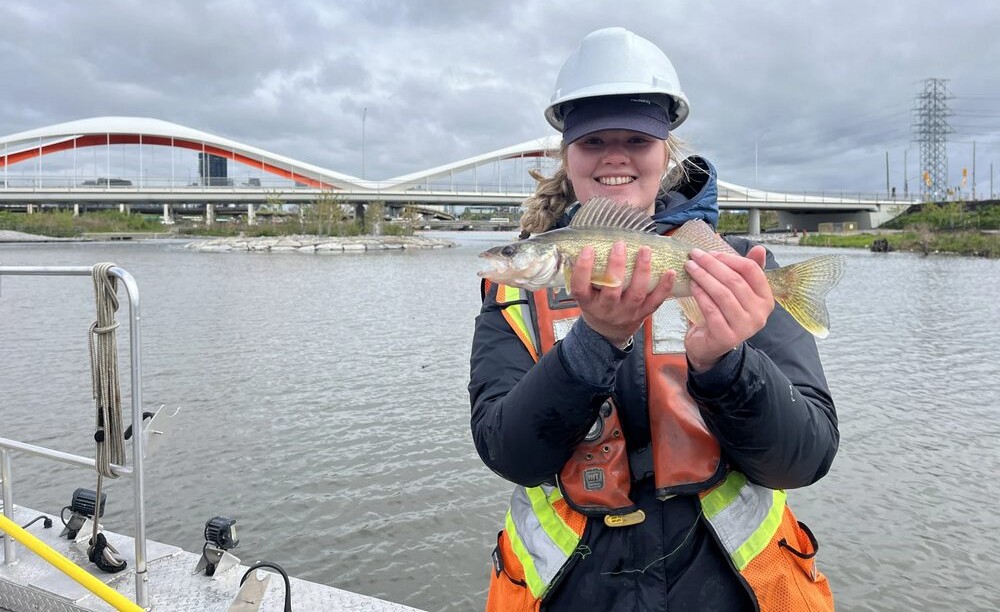
Now, Canada’s National Observer brings us a story of the Don River going from a state of pollution to rival the Thames of London, to a biodiverse ecosystem home to over 20 species of fish.
As with so many rivers that bisect cities all along each side of the border in the Great Lakes Region, Toronto’s River Don was so polluted in once caught fire.
After CAD$1 billion in restoration initiatives, however, for the first time in virtually anyone’s living memory, the river is clean and fishable, with ecologists recently confirming the presence of Atlantic salmon, large mouth bass at every life stage, and the emerald bowfin—a warm-water fish native to Ontario—all at the same time.
Toronto and Region Conservation Authority (TRCA) undertook a broad survey of the Don River, its watershed, newly-restored wetlands, and tributaries, and the results could best be described as a clean bill of health.
As the Lake Ontario port was industrialized in the 1800s, the meandering path of the Don River was canalized into straight lines featuring an unnatural 90° angle that diverted it away from the inner harbor. The straight lines accelerated the water flow, while the loss of adjacent wetlands reduced the water holding capacity. The result was decades of frequent flooding.
Undoing this was a key part of the river restoration. From out of the land that was infilled all those years ago, wetlands were created, and the river’s course was gradually altered back to something that appeared natural.
The restoration included climate resiliency measures, new levees, and a delta island called Ookwemin Minising, “the place of the black cherry trees” in Ojibwa. Some 5,000 homes will be built on it.
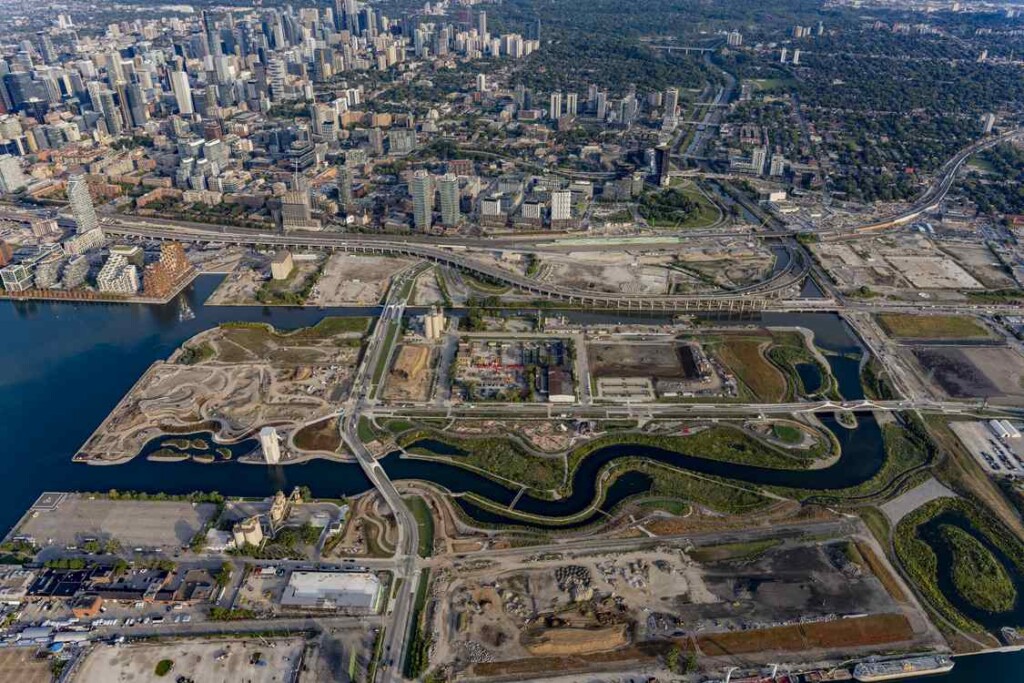
For fish, areas of the naturalized river include gravel beds that fish need to spawn, as well as underwater and above water vegetation they use for shelter. In the first year that the river ran through this new, nature-and-man-made valley, the variety of documented fish greatly increased.
“The fish community in general has definitely increased in the area,” Brynn Coey, supervisor of aquatic monitoring and management at TRCA, told the Observer.
CANADA NEWS: Hidden Ecosystem Buried for 130 Years Wakes Up After Bulldozer Uncovers Green Shoots in Toronto
“And we’re seeing different life stages… very juvenile, just born, pumpkin seed — a sunfish, for example. And then we’re getting underwater video of these massive, largemouth bass in these wetlands.”
The bass are just one of several predatory fish that have returned, which also include northern pike and walleye.
RIVERS RETURNING: Chicago River Follows the Seine to Become Biodynamic and Swimmable Once Again
Such outstanding initial results won’t distract Coey and her colleagues, who know there’s still a lot of data to collect on the new river and its habitats.
For a waterway that was declared biologically dead as far back as 1969, it’s a been a mighty-long time coming, but this major artery of Lake Ontario has sunnier, easy-breathing days ahead.
SHARE This River’s Long-Awaited Return To Normalcy With Your Friends…